Wednesday, April 8, 2015

Day 8: Acceptance is Community

Ben building with his friends during the Buddy Walk for Down Syndrome earlier this year.  

Okay, tonight I’m cheating a bit. 

I hope you’ll forgive me, but I’m copying part of a post that I wrote earlier this year for tonight’s blog entry.  

It’s been a long day but a productive one filled with school, a parent teacher conference (where I took on the role of parent, not teacher), a parent support group meeting for parents of kids with sensory needs, and a chat with a colleague/friend.  

It has been a day that has served to remind me of how many wonderful people surround my family.  

It’s amazing to think that many of these people have only come into my life in these last couple of years since Ben’s diagnosis. 

It took time before I found my tribe.

At first, raising a child with special needs felt very isolating. 

It seemed as if no one was going through what we were going through.

Other moms that I would meet during playdates would talk about their child’s latest accomplishment, whether it was learning the piano or getting a new swimming medal.  I wanted to celebrate the fact that my kiddo tried a new food and finally learned how to put on his socks by himself. 

It felt awkward and strange at birthday parties when your kid is the one in the corner, barely playing with the others, or, in my case, clinging to my side the entire time.  This was how it was at first.  

Slowly certain friends drift away.

However, in their place was a whole new community that I never even knew existed.

I have become friends and connected with so many amazing people who have helped to support us and help us grow along the way. 
  
Fellow parents who understand when your child acts differently during a playdate and cheer along with you when your child finally learns to pump his legs and swing at the age of five.

Fellow educators and colleagues who have long conversations over cups of coffee to help you truly understand IEPs, accommodations, and goals.

Teachers, OTs, and SLPs in Ben's life who go the extra mile for him every day and who love him for who he is...no matter what.  They rally around him as a team in support, and I learn from them every time we meet.

I have meet a wonderful support group of parents and autistic adults both in the real world and the virtual world. 

I’ve met fellow bloggers around the world who have children with different but similar needs to mine.  

We are finding our way together.

Hearing the stories of others helps to remind me that I’m not on this journey alone. 

And now, for your reading pleasure, here is a section from a post I wrote at the beginning of this school year.  In this blog post I write about how I believe we must go through the five step grieving process after our child receives a diagnosis before we can come to the place of acceptance.  And, while autistic adults would not have us mourn for those who are on the spectrum, I think we parents must come to terms with the loss of the child we thought we were going to have in order to embrace the child that we do have.  You can read the post in it’s entirety here, but, for now, let's skip directly to the part talking about acceptance:

Acceptance-

It will get easier over time. 

I promise. 

Some days are hard, some days feel impossible, but then there may not even be days, but just moments- moments of sheer joy and bliss, when you see that thing that makes your child so uniquely wonderful that it literally takes your breath away. 

I try to fill this blog with those moments so I can come back later and remind myself of them, to keep me strong when I need to hold onto them the most.

I wish that everyone could reach the acceptance stage. 

Sadly, too many hang on to their feelings of anger and sadness. 

They hang on to their vision of the child they believed they would have, rather than the child that they do have. 

You’ll know you’ve made it to acceptance when you start looking at things from the perspective of your child. 

When you think about how all this big, loud, confusing, and often scary world is impacting him.  When you stop to consider first what is like to walk in his shoes every single day. 

And, when you take the time to do this, then you’ll be so proud and amazed at all your child can do in spite of all the obstacles the world puts in front of him. 

You’ll want to be his ambassador to the world, to teach the world about him and others like him, so that person by person, those others will change, so that eventually society can change and see your child the way you see him, for the unique and wonderful person he is.

Acceptance is letting go of that picture that you held in your mind of what your child was going to become.  Of the person you thought he was destined to be.

Because, believe me, once you let go of your preconceived ideas of what your child should and should not become, then you allow your child to develop into the person that he or she is meant to become. 

And then, when you truly embrace the unique gifts and talents that your child brings to this world, a whole new world of amazing possibilities that you never could have imagined opens up before you. 

And it’s better…so much better…than you could have ever hoped, imagined, or dreamed. 

Your child may not be the child you expected him to be, but he is a gift to this world, with his own unique strengths and talents to share. 

And, with the right people and supports in place to help him to be his best self, you can unlock these hidden gifts and let the beauty shine through.

And then you’ll discover something that’s the most amazing part of all. 

It wasn’t your kid who needed to change the most, really. 

The one who needed to change all along was you. 

And then once you change, then you can help others to change. 

And that’s when you know you are on the way.

You’ll seek out other autistic adults, because you will know that they were once autistic children, and they know what it feels like to go through what your kid is going through.  You’ll learn that they are the true experts, because they are living it right now.  If you’re lucky, you will count them as your friends.

You’ll become part of a whole new community, new circles of people in your life who will support you and lift you up when times are difficult. 

Most importantly, you’ll find that inner peace within you. 

Not to say that you spend all of your days in a serene, zen state.  I wish.  However, even amidst the chaos that is life, you will feel this settled feeling inside knowing that, even though things may be falling apart all around you, you are on the right path, because even though you may not make all the “right” decisions, you are doing what’s best for your child in the long run.

You’ll feel a huge sense of pride in the fact that you are now part of an ever-growing movement, much like the civil rights movement in the 1960s, that is literally changing society as we speak.   That’s when you become an advocate

You may not advocate by marching for the autism cause.  You may not wave a banner, network with politicians, or even write a blog.  If you like doing those things, I encourage you to, but I want you to understand it’s not a necessary ingredient to being an advocate.

To advocate for autism acceptance is to treat your child with dignity and respect, even in the midst of his darkest moments.  This will speak volumes to all watching you, first and foremost your child. 

Every time you interact with the general public, whether at a restaurant or the grocery store, and people around you watch how you handle a moment when your child is having a hard time, you are teaching others how to model the practices of autism acceptance.  When you explain to a family member, a friend, or even a complete stranger what autism is…what it truly is…and how it’s okay… you’re modeling acceptance.

No matter where you are on your stages in this process, I wish you well. 

You may not believe everything I have to say, but consider this. 

I wouldn’t have believed these words a year ago either. 

We all have to work through the stages.

Remember, you must pass through them all. 

There is no skipping steps. 

The amount of time it takes to work through each one will be different for each of us.

But remember, you are not alone. 

Find your community. 

Find your tribe.

The internet is a wonderful place for community, but you need one in the real world also. 


And, finally, never stop looking to find your peace.  Your child is worth it.  Your family is worth it.  You are worth it.

Tuesday, April 7, 2015

Day 7: Acceptance is Inclusive

This is still one of my favorite pictures of Ben with his best friend at school.
On the eve of my report card conference with Ben’s teacher and wonderful team of support people who work with him, I thought it only appropriate to write about the importance of inclusion and how inclusion leads to acceptance.  We have been fortunate to find a school that embraces the inclusion model and works hard to make inclusion work.  There are many different types of classroom settings that are designed for different purposes.  Inclusion is one such setting.  While an inclusion classroom might not be the best placement for every learner, I do believe that the spirit of inclusion in our society is an important and necessary goal- regardless of the severity of need of the individual.
First, I want to start by saying that inclusion is not easy.  An inclusion classroom is more than just a room full of children with disabilities mixed in with their “typically developing” peers.  As Jess from Diary of a Mom explains,  “Inclusion is a process. Day to day, moment to moment – inclusion takes thought and planning and effort. It takes a mindset of hope and possibility. It takes belief in the intrinsic value and unlimited potential of each and every human being. It takes determination and tenacity. It takes compassion and empathy.  It takes the understanding that to truly come together, we must learn not just to tolerate, but to CELEBRATE our differences. There is far more than beauty in our diversity – there is incredible strength.”
But how do we teach our children not just to accept but to celebrate differences?  This seems great in theory but can become tricky in the real world.  There are so many factors at play.
It is human nature to fear what we do not understand.  Not only children but often adults have little experience with autism, Down’s Syndrome, Tourette’s, etc.  I have a friend who has a son with Down’s Syndrome, and she once told me that she tells his teachers every year (and I’m paraphrasing here based on my memory of our conversation), “I don’t want you to feel intimidated by my son.  I don’t want you to feel overwhelmed by his diagnosis and his needs.  Never lose sight of the fact that he first and foremost a little boy.  And I am here to support you all the way.” 
I think it’s important to acknowledge that challenges will come up as we work to support an inclusive environment, not just in the classroom but also in our community.  People still don’t know how to react when they observe behaviors outside their comfort zones.  Recently I was at an Easter egg hunt for autistic children and their families.  The egg hunt was due to start at 11:45 am.  It was 11:50 am and there were still no signs of the hunt beginning.   A little boy about eight years old walked directly up to me, took my wrist in his hand and pointed to my watch as he said, “The time is 11:50.  We are now five minutes behind schedule.  The schedule said that the egg hunt was due to start at 11:45 am.”  I calmly looked at the boy and said, “You’re correct, but I’m not the one in charge of starting this event.  You need to speak to the person in charge, and she is standing over there.”  Instantly, the boy dropped my arm and walked over to the event coordinator.  I wasn’t put off at all by the boy’s actions because I understood the situation and his needs.  How many others in our society would have known how to respond? 
When Ben reaches adulthood, I want him to live in a world that accepts and embraces differences.  In order to do this, it is our responsibility as adults to model behaviors of respect.  We must always remember that children are watching our actions more than they are listening to our words.  As Jess from “Diary of a Mom” says, “If they see us tease, they will tease. We must rethink the easy jokes about those who are different from us. We must reconsider the words that can so easily fall off our tongues. “Retarded” has become ubiquitous, nearly accepted. It’s up to us to remove it from the lexicon of the next generation. Yes, we must select our words with care. Words have the power to encourage, to create, to inspire. They also have the power to wound, to scar, and to destroy. And once they’re out there, we can’t take them back. Our children hear every word that we say. We MUST choose them carefully.”
We fear the things that we do not understand.

I want to start conversations about differences so that children can feel free to ask questions in a respectful manner.  By asking questions, they will gain a greater understanding, and hopefully appreciation for their classmates who may learn or act in different ways from them.  The more we respect one another, the less we allow others to tease and bully.  

Inclusion is not always easy but it is worth the time and effort to do it right.

Every child deserves to be accepted and belong.

**And, as a bonus, here’s my list of factors that I believe need to be present for an inclusion classroom to be successful.  This list is by no means exhaustive, but I believe it is a good starting point with schools that are looking to implement or refine their inclusion models.**

Classroom Environment (Setting)

The inclusion classroom is designed with the needs of all learners in mind, but it is highly individualized based on students’ IEP goals and accommodations.   The classroom is set up to minimize distractions and promote learning with…

-Clearly defined spaces/areas within the classroom with relevant materials only.
(i.e. stations/centers, carpet area, student work area, class library, etc)

-Daily schedule posted, referred to often, and consistently followed
            -Student visual schedules are available on desks or readily accessible

-Predictable routines and procedures

-Consistent rules and expectations (Gives clarity on how to do things)

-Calm, organized environment with a reduction of visual distractions

-Cool-down area (For sensory breaks- Students learn to use as needed)

-Calm lighting and a soothing environment during work time.

Teacher

In an inclusion classroom, the classroom teacher works side-by-side with the ESE teacher as a team for both planning and instruction.  This might be done using a co-teaching approach or utilizing several different models.

Some characteristics of a strong inclusion classroom teacher include…

-Kind, firm, and consistent

-Has some background in children with special needs (if possible)

-Willingness to learn and grow (seeks out professional development)

-Maintains clear and consistent expectations.

-Clear, precise teaching points (not overly long lessons).  Uses visual cues along with verbal directions.

-Has a calm disposition (does not get “ruffled” easily).   Recognizes that all behavior is communication and does not take student behaviors personally.

-Holds kids accountable academically and behaviorally.   Students know exactly what to expect. There is no “gray” area.

-Has high expectations but also differentiates for the needs of all learners.

Additional Supports

One major key to making inclusion work is considering how all of the ESE support teachers (speech, OT, paras, etc) fit into the structures for the day.  These key members of the team need to coordinate schedules effectively.  Ideally, they offer supports within the inclusion classroom and provide techniques that can be utilized throughout the day, not just when they are in the class providing services.

-The classroom teacher works in partnership with the ESE resource teacher, the SLP, the OT, and other school personnel.

-Schedules are built with student needs in mind first (as defined by the IEP).

-Movement Breaks/Cool-down breaks are provided as needed.  The student has a “safe space” either inside or outside the classroom (ie OT room) during times of high stress

-When “Big Events” occur at school, sensory strategies are provided during and after

-Visual Schedules/Reinforcers are part of the daily routine

-The schedule is built with predictability in mind.  Students always know what’s coming next.

-Tasks are explained but also defined visually with examples.

-Teacher uses nonverbal cues to remind students of rules and expectations

-Increase the frequency and immediacy of reinforcement

-Small group instruction is utilized as often as possible.

-ESE supports “push-in” the classroom whenever possible and plan closely with the classroom teacher based on curriculum standards and IEP goals.


*Some of these suggestions were taken from the Florida Inclusion Network, which is a wonderful collection of resources.  You can learn more at www.floridainclusionnetwork.com

Monday, April 6, 2015

Day 6: Acceptance is Patient

“All children can learn, but in different ways and on different days”
Our society is in such a hurry.

We want our child to keep pace, whether it is kicking the most soccer goals or getting the best grades.

We wear it like a badge of honor when our child is advanced or does something ahead of schedule.

We stick the “My Child is an Honor Roll Student” bumper sticker on our car and post stories of our child’s accomplishments on Facebook.

We compare one child against another, even though we know this is wrong.

And so we push kids too far…too quickly…too soon.

But what happens when our child doesn’t measure up?

I am very familiar with measuring sticks. 

It is my job as an educator to know the standards that measure student learning outcomes at each grade level.

A large part of my job deals with understanding the standards, unpacking them, assessing them, and tracking how children perform in relationship to them.

I helped to write the pacing guides that dictate the curriculum that the teachers in our district follow.

I am the queen of high expectations.

I not only say that all children can learn- I believe it.

I know exactly what my son must know and be able to do in school.

I know that he is ahead…and that he is behind.

But I also I know that he will get there in his own time.

It has taken me a long time to get to a place where I have learned to accept that Ben will learn on a different timetable and will show his learning in ways that are not always typical.

This hasn’t always been easy.

When Ben was a baby I would read the “What to Expect” books and impatiently watch for the milestones.  I beamed with pride when he learned to hold his head up, roll over, and crawl.  At first, the milestones came right on schedule, even ahead, but then things started slowing down.

When he walked at sixteen months, I reminded myself that it was within the range of normal. 

When his talking lagged behind, I assured myself that boys talk later.

I tried not to look around his preschool class and compare- but I couldn’t help but notice the little boy who was talking in complete sentences to his Mommy and the little girl asking endless questions to the teacher.  Meanwhile, my child was stuffing Easter grass in his mouth at the sensory table nearby. 

Fast forward to Ben’s autism diagnosis.

Report after report confirmed that Ben was delayed in many areas.  20 month delay in fine motor and gross motor skills.  Low average scores in auditory and expressive communication.  Delays in social functioning with sensory sensitivities and attention/self-regulation difficulties.

Hearing that your child is below average in such cold, clinical terms is hard to hear, even when you know it’s true.  As an educator, I’ve sat on the other side of the table in such meetings.  I’ve seen the charts and that graphs and I know what they mean.

It is a very different feeling when the data belongs to your precious child.

At first I let the numbers define my feelings and I allowed worry to enter in.    

Then I felt a huge sense of urgency to help him catch up.  I read articles that talked about the magical window of time for learning between birth and age five.  I began scrambling to find therapies to help him.  

To catch him up.  

To get him on track with his peers.

Fast forward to PreK.  I heard time after time that Ben is smart, but his difficulties with focusing makes it hard for him to show his intelligence during assessments.  He struggled with peer relationships and paying attention in class.  He had difficulty regulating his emotions. 

When comparing Ben to his classmates, he was both ahead and behind.  Academically, he knew all of his letter names, letter sounds, and many sight words.   He had known them since before he was three.  His vocabulary was well advanced for his age.  And yet, on any given day, he may or may not be able to demonstrate this knowledge during an “on demand” assessment.  Mathematically, he could count to 100, though he struggled to recognize basic shapes.  He had mastered basic addition and had a strong concept of number sense.  Writing, however, was a huge struggle.  He absolutely refused any writing task unless it was done “hand over hand” with an adult.  Cutting was hugely frustrating to him.

Ben excelled in some areas and lagged in others.  In the autism world we call this “splinter skills”.  Many people on the spectrum are very advanced in certain areas but far behind in others.  This is why it is absolute fallacy to compare one person’s progress to another. 

By kindergarten I had learned to compare Ben’s progress to Ben alone.  

I now understand that Ben will meet the standards and expectations, in his own time.

His writing has improved by leaps and bounds this year.  He now knows how to correctly hold a writing instrument and is beginning to write simple words and sentences.  His drawings have moved from “scribble scrabble” as he calls it to clearly recognizable people and even animals.

Ben is reading on grade level (though he prefers to read “easy peasy lemon squeezy” books with a clear pattern) and continues to show strong math abilities.  He can mentally add and subtract one and even some two digit numbers.  And still, on any given day, an assessment may or may not show his true abilities.

I have learned to accept that Ben is a different kind of learner. 

He is a smart kid but school does not always highlight his strengths.

He has deficit areas that we are addressing through therapy and intervention .

I look for progress and I look for growth, but I no longer expect his progress to match a predetermined pacing guide.  Past experience tells me that we may not see "improvement" in a certain area for a long time, only to see a huge spurt of growth in a very short timespan. 

So it was with potty training.  Ben struggled with this until he was 3 ½, and then in a matter of a couple of days he was fully trained.  No accidents at night.  No accidents in the car.  Not ever.  This is how he works.

I accept Ben for the wonderfully unique learner who he is.

I no longer stare at the student work samples on the wall outside his classroom and agonize because his letters aren’t as straight, his ideas aren’t as clear, or his coloring isn’t neat and inside the lines as the paper next to his.


I smile because I see the beauty within the work that he does. 

I smile because I know how far he has come and how far he will go.

Sunday, April 5, 2015

Day 5: Acceptance is an act of Faith


Today is Easter Sunday.

Easter may mean different things to each of you, but this is what is means to me.

Easter is so much more than eggs and chocolate bunnies.

To me, is a story of love.

It is a story of sacrifice and of victory.

A Father’s sacrifice of his Son so that we may be free.

A Son’s sacrifice of his life in exchange for our sins.

And, ultimately, a Savior who faced and overcame death so that death would no longer have a hold over us.

His sacrifice was made long ago, and yet those of us who believe accept the price that He paid on faith.

Accepting this on faith is the very key to our salvation.

I have no physical evidence of this sacrifice, and yet still I believe.

For me, faith is about acceptance in the absence of physical proof.

In the words of Dr. Martin Luther King, “Faith is taking the first step, even when you can’t see the whole staircase.” “

Walking in faith is not always easy for me.

Faith is something that my Type A personality cannot control.

I have learned to let go and accept things as they are.

I have learned to accept that my son for who he is, without the need to change him into someone who he is not.

Acceptance is not resignation.

It is not giving in or giving up.

It is letting go of the fight against things that cannot change.

And when I let go and accept, then I am truly free.

I accept my child for who he is.


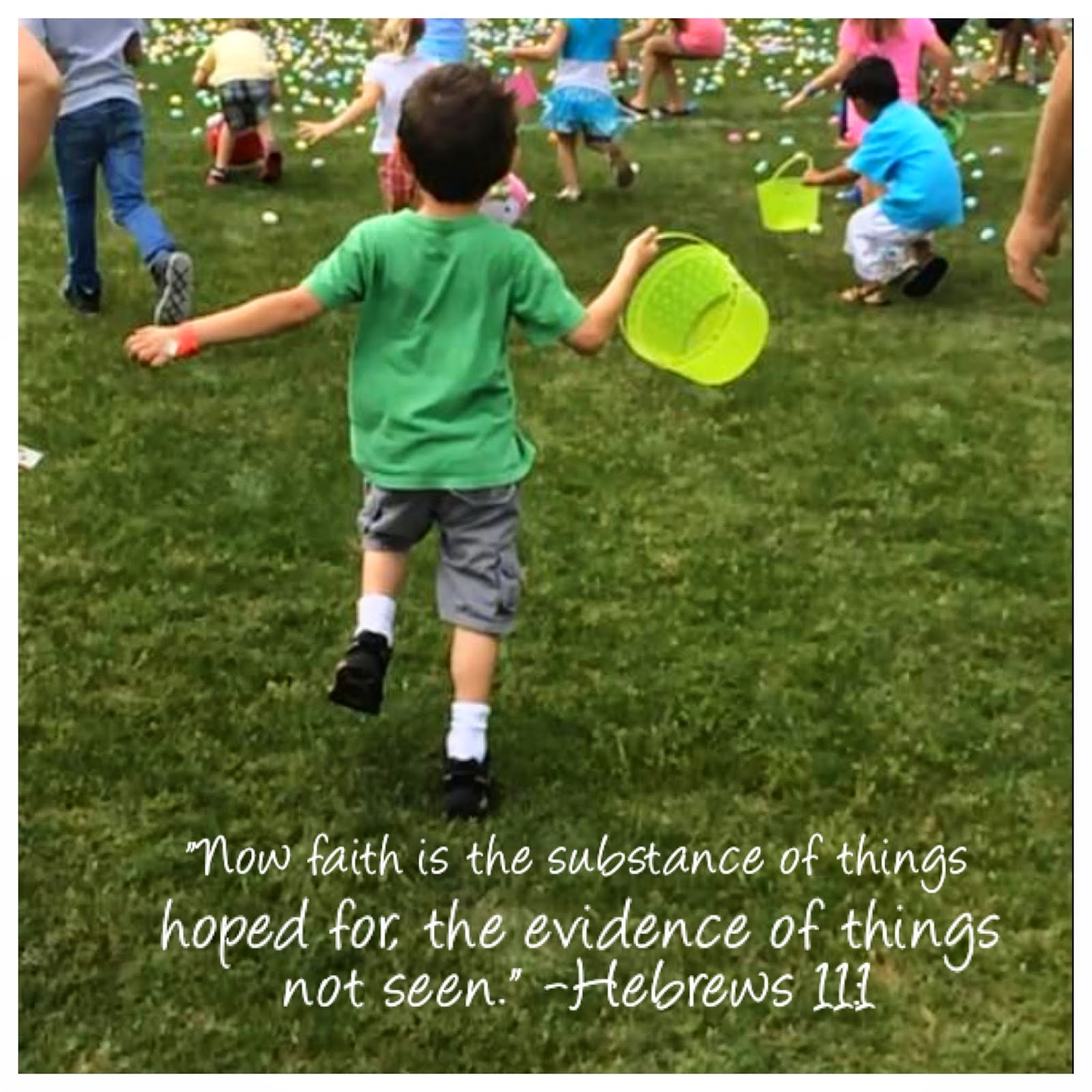
I have faith that God will take care of the rest.